

Advertising Guide​: TikTok

TikTok has evolved into one of the fastest-growing short-form video platforms globally, redefining how users discover content, products and brands. Built around an algorithm-driven “For You” feed, TikTok prioritises relevance and engagement over follower count, creating opportunities for brands to achieve rapid organic-style reach through paid placements. 

Unlike traditional social platforms, TikTok advertising is culture-driven and creative-first. TikTok ad success heavily depends on authenticity, trend alignment and native storytelling. 

But, as a brand, how does one engage with this captive audience? We’re glad you asked. Let’s look at the kind of advertising you can do on TikTok in 2026.

Inside the TikTok Algorithm

TikTok is built around short-form vertical video designed for rapid consumption. While videos can now exceed several minutes, the platform’s strength remains concise, engaging content designed to capture attention within the first few seconds. 

The “For You” feed uses machine learning to surface content based on user behaviour rather than social connections. This means paid content competes directly with organic creator content, making native creative execution essential. 

There is a wide variety of content that people go to TikTok for, but it gets used most commonly for entertainment – such as sharing clips of pranks, stunts, dancing or video game footage.

Viral trends often take the form of challenges, where content creators use an established template to contribute towards a common hashtag. These can be just for fun, like the Jerusalema Dance challenge, to impactful and educational, like Dettol’s handwashing challenge. 

Another area that TikTok does well is their 2D, 3D and gamified effects, along with overlaying audio. The result makes it easy for users to engage with branded content or to participate in trends in highly creative ways. You will often come across pop culture references that may seem obscure, but to the niche audiences, this is very engaging content. 

One of the most interesting aspects of the platform that our TikTok advertising guide found is the demographics of the South African audience. As of October 2021, our user base had grown to 9.3 million monthly active users, watching 24.8 billion videos per month. 60% of these users were female, and the majority fall into the 13 – 24 age group. This offers a unique opportunity for brands to engage with much younger audiences, making it a fantastic place to build brand awareness and trust from a young age. 

How to Reach TikTok Audiences

TikTok advertising is managed through TikTok Ads Manager, allowing advertisers to define audiences using demographic, behavioural and device-based signals. 

Demographic & Geographic Targeting

  • Location, being as broad as country-wide or more granularly as per town. 
  • Gender, giving you the option to target men or women or both. 
  • Age, in pre-defined ranges of 13-17, 18-24, 25-34, 35-44, 45-54 and 55+. 
  • Language, where you pick any of the 29 supported languages. 

Interest & Behaviour Targeting

Grouping users broadly into interest categories such as: 

  • Education 
  • Baby products 
  • Beauty & skincare 
  • Travel 
  • Pets 
  • News & media 

Device Targeting

  • Device OS, where you can choose to target users of a specific mobile operating system. 
  • Device price, where you can target users based on the retail price of the device they’re using. 
  • Device carriers, to get ads in front of users on certain provider networks, like Vodacom or MTN. 
  • Device connection type, to target users using Wi-Fi or specific data connections. 

This is a notably different approach to other platforms, who tend to utilise more behaviour-based targeting criteria. By leaning on interests, it allows users to be more hands-off in their approach and implementation of the ad while leaning on TikTok’s machine learning algorithms to serve the ad up to interested users. Behaviour-based targeting has been observed as being influential in short-term behaviours, such as engaging with promoted content, but interest-based advertising carries more weight in the long term, such as influencing brand opinion.  

Types of TikTok Advertising

When it comes to the format of TikTok advertising, there are four main ways of engaging with your audience, namely In-feed ads, TopViews, Branded Effects and Branded Hashtag Challenges. 

In-Feed Adverts

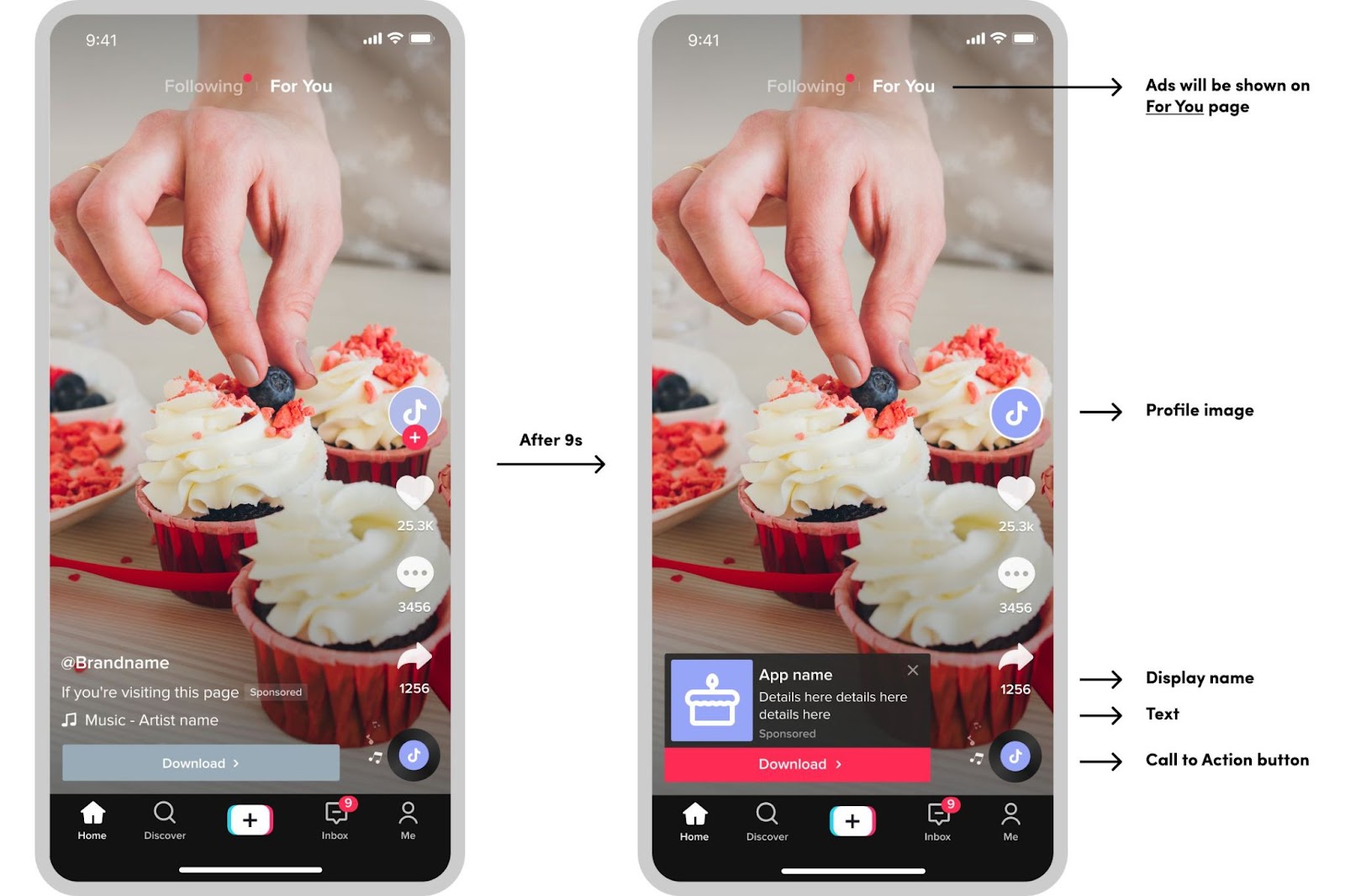
The “entry level” TikTok advert is an in-feed video. This blends your paid content in amongst user generated content for users to come across while engaging with content that appeals to their interests. It follows the same formula for posting an organic TikTok video, although it also adds an optional CTA button depending on the billing event that you set, allowing you to utilise a landing page to further enhance your marketing efforts.

To take things to the next level, you could also opt for a One Day Max ad. This is still an in-feed video ad, meaning a user would find it while using the TikTok app how they normally do. However, a One Day Max placement guarantees that your ad will be the first to appear on users’ timelines each day, typically just three videos from the top point where they load in at. This format is helpful to own a certain conversation point that other brands may be engaging in, or to hammer home brand awareness.
 

TopView

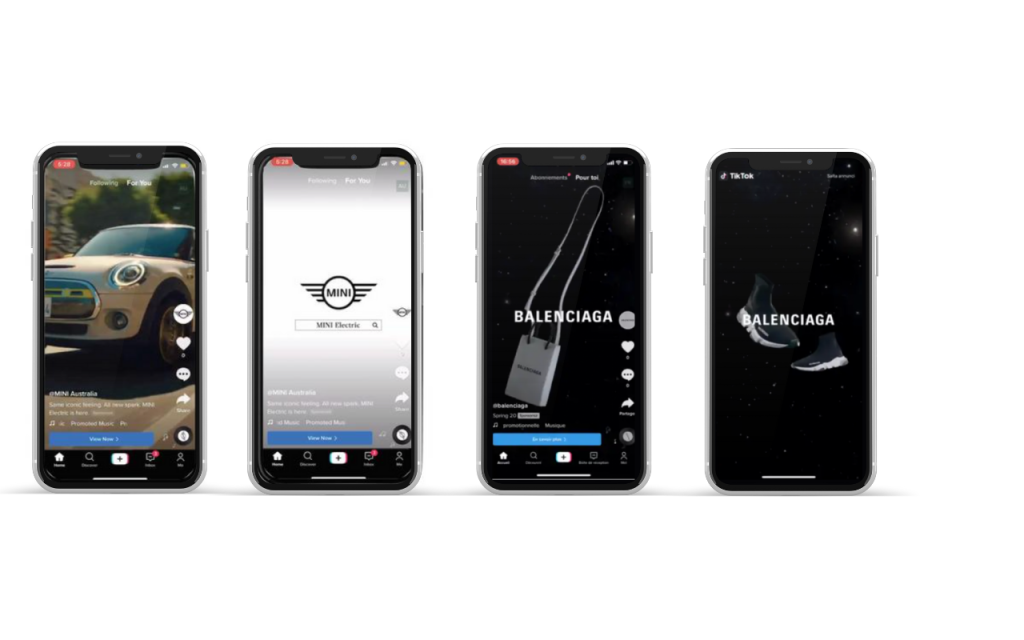
The next step up from a One Day Max ad is a TopView ad. A TopView ad utilises the time taken for the app to open, captivating your audience in the few seconds before reaching their feed. Paired with this, you also secure the first video ad slot of the day, giving your audience another chance to be exposed to and engage with your messaging. While deeplinking is available in this format, the trade-off of having the ad play with sound on while the app loads is often worth it.
 

Branded Effects

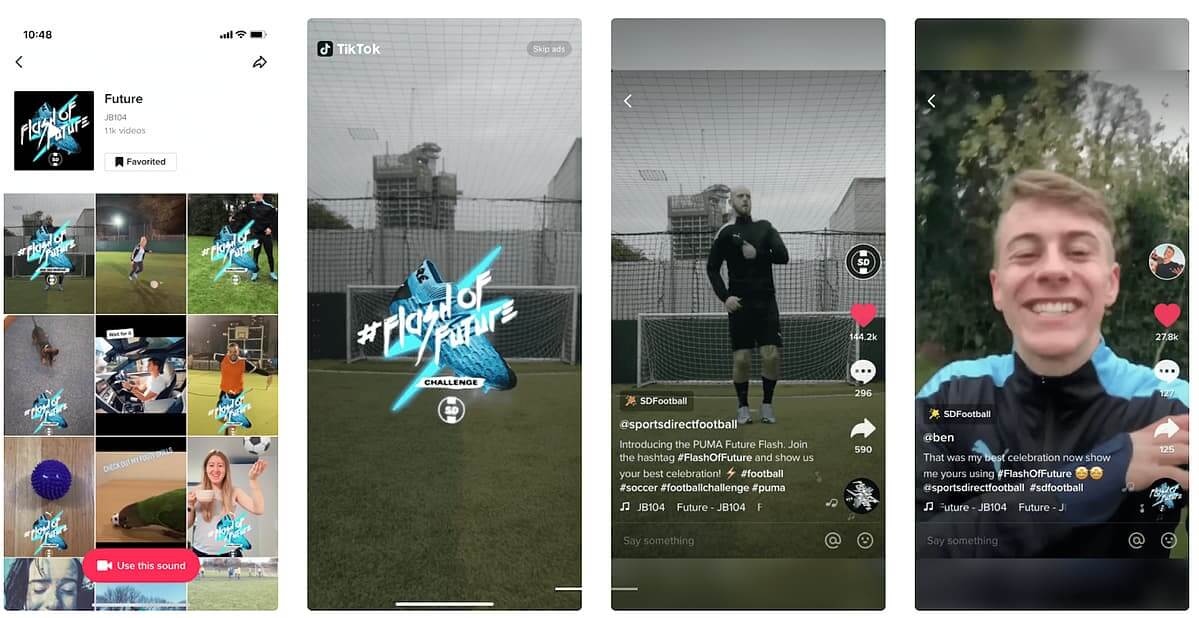
Branded effects are a new format of advertising that allows social users to engage with a toolset of content that you develop, allowing them to overlay it into their own content in fun and engaging ways. The options are very close to endless, since you could have simple 2D graphics, all the way up to 3D or gamified effects that help users have fun while using your brand’s effects. These effects can be triggered by 20+ different gestures or facial expressions while users are creating content, making it easy to use from their side as well. Branded effects tend to work best when paired with a Hashtag Challenge, to fully get the most “mileage” out of the effects you’re creating.
 

Hashtag Challenge

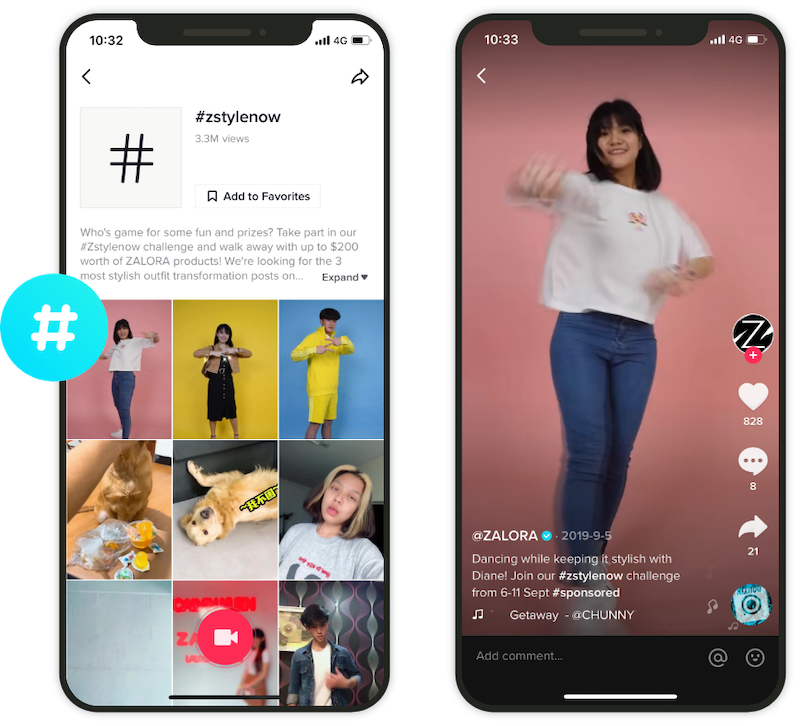
In a similar way to branded effects, a hashtag challenge puts the tools of creation in the hands of TikTok users. Conceptually, you’d want to think of a visual way for people to take part and celebrate who you are and what you do – though we’re always happy to help you brainstorm the best way to make this happen. Challenges run for 6 days, and include a banner on TikTok’s Discover page, as well as promoting your Hashtag on the Discover page too. You also get an included TopView ad to get your challenge started and help encourage involvement.

Finally, you also get a hashtag challenge page, which curates the user generated content in one place and allows you to manage and oversee your campaign easily. This is an exceptionally successful method of advertising, as they quite often spill over into word-of-mouth advertising or even garner attention from news outlets. Engaging with influencers is also a smart way to ensure you get maximum mileage out of your challenge.

 

Creative Strategy on TikTok

TikTok is a creative-first platform. Traditional, highly polished advertisements often underperform compared to content that mirrors creator-style storytelling. 

Effective TikTok creative typically includes: 

  • Immediate hooks within the first 2–3 seconds 
  • Vertical, mobile-first framing 
  • Native sound integration 
  • Trend awareness 
  • Clear but subtle calls to action 

Testing multiple creative variations is critical, as performance is driven heavily by content resonance. 

Measuring TikTok Advertising Performance

TikTok campaigns should be evaluated using both platform-level and business-level metrics.

Platform Metrics

  • Video view rate 
  • Average watch time 
  • CTR 
  • Cost per click 
  • Engagement rate 

Business Metrics

  • Cost per acquisition 
  • Conversion rate 
  • Revenue per campaign 
  • Return on ad spend 

TikTok Pixel implementation and first-party data integration are essential for conversion optimisation. 

Common TikTok Advertising Mistakes

Repurposing Traditional Ad Creative

Corporate-style ads often underperform on TikTok.

Ignoring the First Three Seconds

Hook strength directly impacts view completion and engagement.

Hook strength directly impacts view completion and engagement.

TikTok’s algorithm performs best when given space to optimise.

Failing to Refresh Creative Regularly

Creative fatigue occurs quickly in fast-moving feeds.

Overlooking Influencer Collaboration

Creator partnerships can significantly improve authenticity and reach.

Frequently Asked Questions

Is TikTok advertising only for Gen Z?

No. While TikTok began with a younger demographic, its audience has broadened significantly across age groups.

Costs vary based on targeting and competition. Creative quality heavily influences efficiency.

TikTok Pixel tracks website behaviour and enables conversion optimisation.

No campaign guarantees virality. Success depends on creative execution and cultural relevance.

TikTok is typically stronger for consumer-focused brands, but can support awareness campaigns for B2B in specific industries.

Looking for a more detailed digital strategy?

We add value through data-driven marketing, optimising market acquisition, brand building, and lead generation.

More Advertising Guides

Get in touch