I’m not a shorts-wearer. (I have very, very short legs and very, very long arms, like a small orangutan.) I usually wear trousers. Or dresses. But I have one pair of denim shorts – and I would rescue them from a fire ahead of any handbag.
Twenty years ago, my denim shorts were jeans. They were grey. Now they’re grey-er. With a blob of candlewax on one thigh and a wonky Sharpie smiley face on the other. The hems are, as you’ve probably anticipated, shredded.
My shorts are deeply unglamorous. But I love their perfect imperfection.
And that’s where I think digital writing is going in 2026: less handbag, more scruffy shorts. Forget poshness. The brands that will win the internet are those that show their frayed hems; that lead with quirks; that write like someone who’s lived.
So, against the backdrop of a digital world that’s drowning in same-same content, let’s take a practical look at how to write with what I call ‘deliberate wonk’.
Avoid the new invisible.
What happens when everyone uses AI to write everything? Well, just look at LinkedIn. A professionally neutered personality. Mediocrity at scale.
I’m not saying don’t use LLMs. (I’m not a hypocrite.) But if you are going to use AI to help you write, you must learn to prompt like a grown-up. Stop feeding it vague nothings and expecting standout results. No more, “Write me a caption.”
Instead, try:
“Write a caption for a protein bar that sounds like a professional padel coach who had three tequilas and feels very naughty about it.”
“Make this post sound like that uncle who collects Krugerrands, wears Crocs to weddings and has strong opinions on mayonnaise (Hellmann’s or nothing).”
“Give me 10 subject lines about getting older, written like a divorced Fourways 40-something who’s seen some shit but can’t afford La Mer.”
TL;DR: When everyone produces beige mush, nothing resonates. And we all suffer.
Weave in strategic scruff.
Perfect polish is suspicious. Everyone’s over-saturated with commercial messaging and most consumers learned to identify and mistrust the big announcer voice (“But wait! There’s more!”) back in 2005. By 2015, they were jaded as hell. And today?
Today (and tomorrow), what works is a bit of schmutz. Copy that’s flawed but cool: emojis in headlines, ALL CAPS in places they don’t belong, an extra full stop.
Deliberate dents in the surface of your writing can help you create more trust in a world where impeccability smells manufactured and we’re increasingly drawn to what feels real – like this email subject line: “SALE. YES, WE’RE SHOUTING.”
While the fact remains that good copy obeys the rules of grammar, rhythm and format, another universal truth is that great copy often toys with them. Our brains notice rule-breakers because they feel real, like these examples:
- A headline that’s one. word. at. a. time.
- A long sentence that refuses to end until it absolutely collapses under its own weight and you find that you’re still reading.
- “Wait for it…wait…wait… OK, now.”
- “Because. Just because.”
Surprise, delight, add friction.
Good digital copy gets in, gets weird and gets remembered. Not because it shouts. Because it doesn’t sound like it was piped through a brand safety filter and then squashed flat by a team of anxious middle managers.
I’m not advocating recklessness, but I am reminding you that most of your audience is scrolling like zombies through 74 near-identical Canva posts with the same five fonts and a caption that starts with, “Did you know…?”.
If you want cut-through, use humour, irreverence and off-beat analogies. Be oddly human. Be slightly unhinged. Instead of: “Our moisturiser is deeply nourishing,” try: “Like chicken soup for your face, but legal and dermatologist-approved” or “Melts in like gossip. Works harder than your therapist.”
Say what people think, not what brands usually say: “We know our app sometimes crashes. So does your brain at 3pm.” Or, “This copy has nothing to do with our product. It just wanted to say hi.” Let readers recognise themselves in your copy.
Celebrate the weird wins.
Some of the ugliest copy I’ve ever seen performs beautifully – because algorithms reward engagement, attention and even chaos, not elegance. Meanwhile, metrics like click-through rates and scroll depth are suffocating your originality.
I’m seeing more smart brands begin to find joy in the scraps: the 404 page that makes you laugh, the call-to-action button that becomes a meme, the cookie banner that feels like a party trick. There’s big opportunity in the tiny real estate.
Examples:
- CTA buttons: “YES, PLEASE” instead of “SUBMIT”; “Regret Nothing” instead of “Buy Now”; “Take My Rands” (I love this one)
- 404 page: “404. It’s not you. It’s us. Definitely us.”
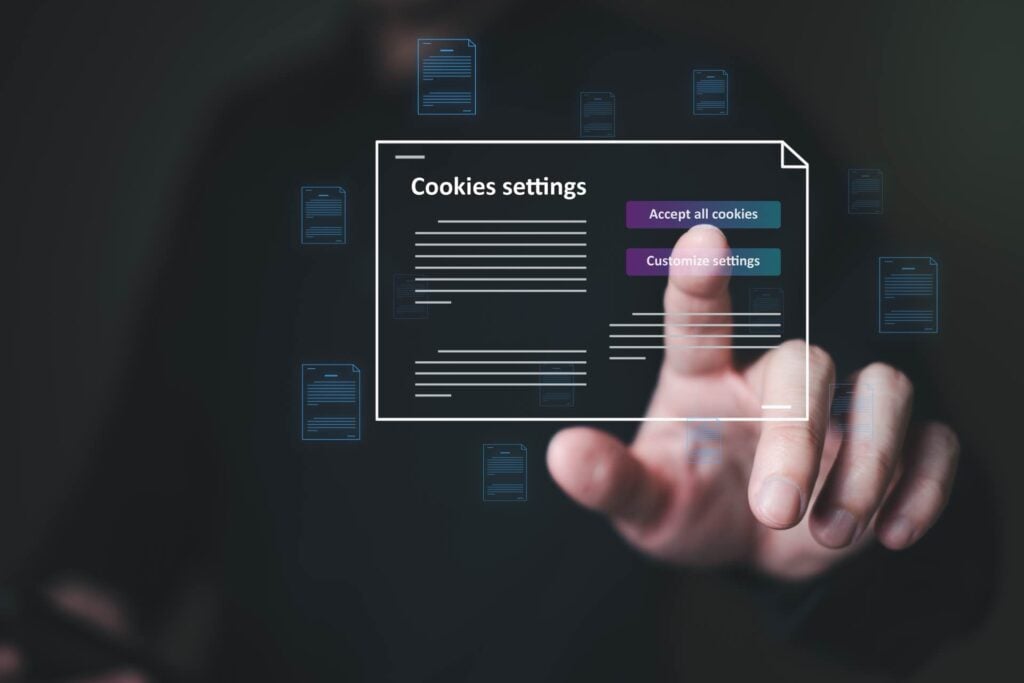
- Cookie banner: “Click accept. Or don’t. We’ll just sit here awkwardly.”
- Checkout page: “You did the thing. Now we do the other thing. Magic incoming.”
Sometimes the smallest, oddest line is remembered and the weird stuff wins.
A single caveat
Deliberate wonk is wonderful, yes. But it’s not a free-for-all. You still need to know your audience. Because chaos without care is just noise and nothing kills credibility faster than trying to be edgy and landing between confused and cancelled.
So, if you are going to write a little more weirdly in 2026 – commit to it. Once-off weirdness can feel like a glitch. But consistent weirdness feels like a voice.
The bottom line
If you’re still worried your copy isn’t “working hard enough” because it doesn’t end with a tidy call-to-action, a moral lesson or a pithy sign-off… Cool. That means you’re (still) human. Not everything has to convert. Or educate. Or inspire.
Sometimes, it’s enough to simply be interesting.
Chris Do expresses this beautifully:
“Write. From the heart. Not from marketing, legal, or a business development POV. Be willing to be vulnerable, transparent, and sometimes funny or profound. You don’t always need to include a CTA, takeaway or lesson.
Write. Because you want to connect.
Write. Because you want to share.
Write. Because the world is better when we have a plurality of diverse voices.
Write. Because someone just like you is waiting for you to show them the way.
Write. Because you give permission to others. Make them feel seen, heard and understood.
Write for no other reason than because it gives you joy.
Don’t do it because you have a gaping hole of insecurity and the constant, never-ending need for validation from strangers, whose opinions you don’t even care about.”
In other words? Not every piece of writing needs a job. Some things just get to exist. And when everyone sounds like ChatGPT in a beige jersey, writing like a real human, in ways that feel unfiltered, becomes a massive competitive advantage.